
爱玩客(全文在线阅读)>
爱玩客Mercenary Leader Prigozhin Reported Dead in Plane Crash by Russian State News_我的网站
A | 澎湃新闻记者 岳怀让 实习生 吴乐妍澎湃新闻记者从唐师曾多位友人处获悉,知名战地记者唐师曾已于2026年8月23日在北京逝世,享年65岁。
B | The leader of the Wagner Group mercenary front that marched his forces on Moscow just months ago was believed to be among 10 individuals who died in a plane crash Wednesday, according to Russia’s state news service. Yevgeny Prigozhin, who led the failed revolt in June, was listed among 10 names on the private plane’s passenger list, according to the report from Tass, which cites the country’s aviation authority. All 10 people aboard the flight were killed. Yet official confirmation that Prigozhin was among them was slow in coming. Before the crash, Prigozhin – who had seemed to largely disappear from public view after he was permitted under a deal brokered by Belarusian President Alexander Lukashenko to take refuge in his country in the wake of the mutiny – was widely believed to be in Africa. He released a recent video in which he can be seen armed in a desert landscape among troops, suggesting the Wagner group had returned to its roots of advancing Russian interest by trading securing guarantees for developmental rights. “Wagner is conducting reconnaissance and search operations, making Russia even greater on every continent – and Africa even more free. Justice and happiness for the African nations,” he said in the video posted this week to his Telegram channel. President Joe Biden, who was quiet on the rebellion as it unfolded, said what many were likely thinking when asked about the reports on Wednesday. “I don’t know for a fact what happened, but I’m not surprised,” Biden said. Asked if he thought it was the work of Russian President Vladimir Putin – whose enemies regularly fall victim to fatal accidents or mysterious attacks – Biden responded, “There’s not much that happens in Russia that Putin’s not behind. But I don’t know enough to know the answer.” Prigozhin appeared to maintain a precarious position within Russian President Vladimir Putin’s inner circle, seemingly allowed to remain at the head of his forces and secure billions of dollars in government contracts despite his aborted rebellion against Moscow in June, when a column of some 25,000 Wagner troops loyal to him conducted a stunning about-face and marched along with fighting vehicles and heavy weaponry toward the capital. Progozhin, who had been increasingly vocal about his dissatisfaction with Russia’s generals as well as the lack of resources supplied to his forces, said publicly that the move was in retaliation for a Russian attack on his forces, although U.S. intelligence indicated that Wagner troops had been amassing near the Russian border for some time. The troops – who were called upon to do some of the heaviest fighting in the ongoing war in Ukraine – marched on the southern Russian metropolis of Rostov-on-Don, seizing the headquarters building of the Russian command overseeing the war. Russian officials sought the arrest of Prigozhin and moved on his convoy. Skirmishes ensued, yet Russian troops reportedly cheered and waved the mercenaries through checkpoints while some even joined the column of Prigozhin’s men that began making its way to Moscow. As quickly as it materialized, the threat dissipated, and Prigozhin issued a statement saying his mercenary front had achieved its ambition of seizing the Kremlin’s attention and was returning to the front lines. An arrest order was withdrawn and Prigozhin was permitted under a deal brokered by Lukashenko. Reports later emerged of meetings between Prigozhin and Putin, and the mercenary leader was subsequently seen in St. Petersburg, where he was permitted access to his vast sums of money that had been seized by the government. The status of Wagner was less clear, with some troops joining regular Russian forces in Ukraine, some remaining in Belarus and some believed to have returned to operations in Africa. Wagner first emerged as the armed extension of Putin’s foreign ambitions for the developing world, particularly to help secure areas in which Russia could prospectively exploit mineral rights and other commercial enterprises – regardless of the tactics required to achieve the goals. Prigozhin, a catering tycoon and Wagner's chief financier who spent time in prison in Russia’s immediate post-Soviet era, parlayed contracts to feed Russia’s troops into a security company of his own. His mercenary front rose to the public’s attention by carrying out highly deniable paramilitary operations in far-flung regions of the world aligned with Russia’s foreign policy. Wagner’s presence in Mozambique, Libya, Central African Republic and Mali resembled a business conglomerate, trading natural resource access for private military services with a penchant for human rights abuses. That expeditionary mission began to change into more of a special operations force with ultimate deniability when Putin, finding difficulty masking the high Russian death toll during the Syrian civil war, employed them to prop up the regime of Bashar Assad during the civil war and simultaneously execute a multinational war against the Islamic State group. 。
C | 据北京大学新闻网介绍,唐师曾,1961年生,江苏无锡人。唐师曾曾任新华社记者、北京大学国际关系学院理事、中国政法大学兼职教授、装甲兵学院研究员,中国作家协会会员、中国摄影家协会会员。
D | 唐师曾早年在北京大学国际政治系就读,1983年进入中国政法大学政治系任教,1986年考入新华社,1990年代长期在中东地区从事战地新闻报道,曾采访加利、卡扎菲、穆巴拉克、阿拉法特、沙米尔、拉宾、佩雷斯、巴拉克、沙龙、曼德拉等国际政要。1998年,唐师曾因受辐射伤害罹患“再生障碍性贫血”,住院做骨穿等治疗。唐师曾主要作品包括:《我从战场归来》《我钻进了金字塔》《重返巴格达》《我的诺曼底》等。 Current article:http://btwn.rangnehongranlinren.bond/zbepov/20260826/163905.html Published on:04:01:18 |


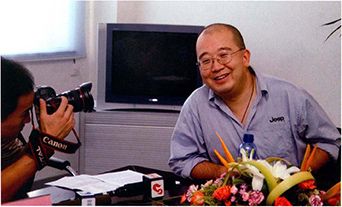 稍早前,唐师曾的中国政法大学、北京大学校友在一封写给他的信中提到,唐师曾是一位“白血球几乎为零的危重病人”,自身免疫力因为化疗已经降到了最低,站立和行走可能随时跌倒。
